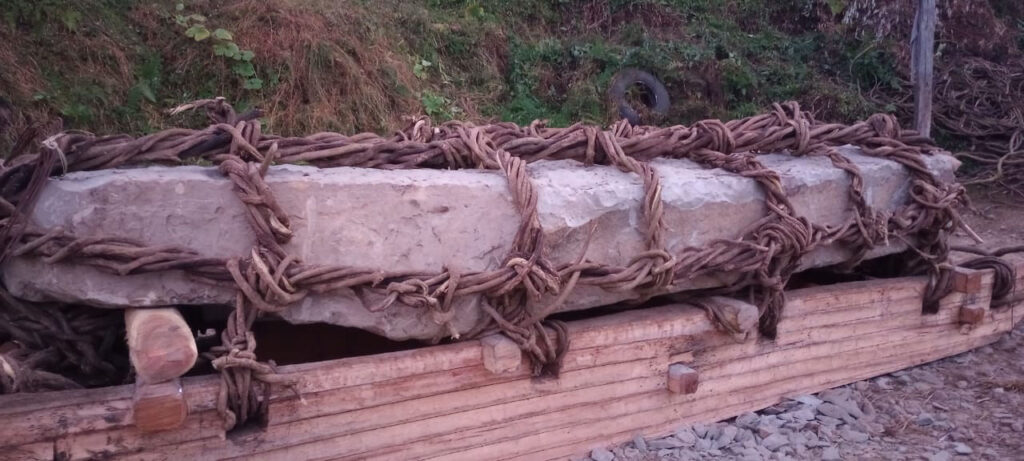
Each December at Kisama Heritage Village, a hush falls, a chant rises, and hundreds of hands close around a giant rope. Then one heave the stone moves. This is Hornbill’s most powerful moment: a multi-ton monolith inching forward, guided by elders, paced by songs, and sustained by support teams passing water and food as the community pulls together.
What is stone-pulling?
Stone-pulling is a living Angami tradition that turns strength into solidarity and memory into movement. In the past, ceremonial stones marked public feasts and milestones. Today, the haul honors that heritage and proves that progress happens when many pull as one.
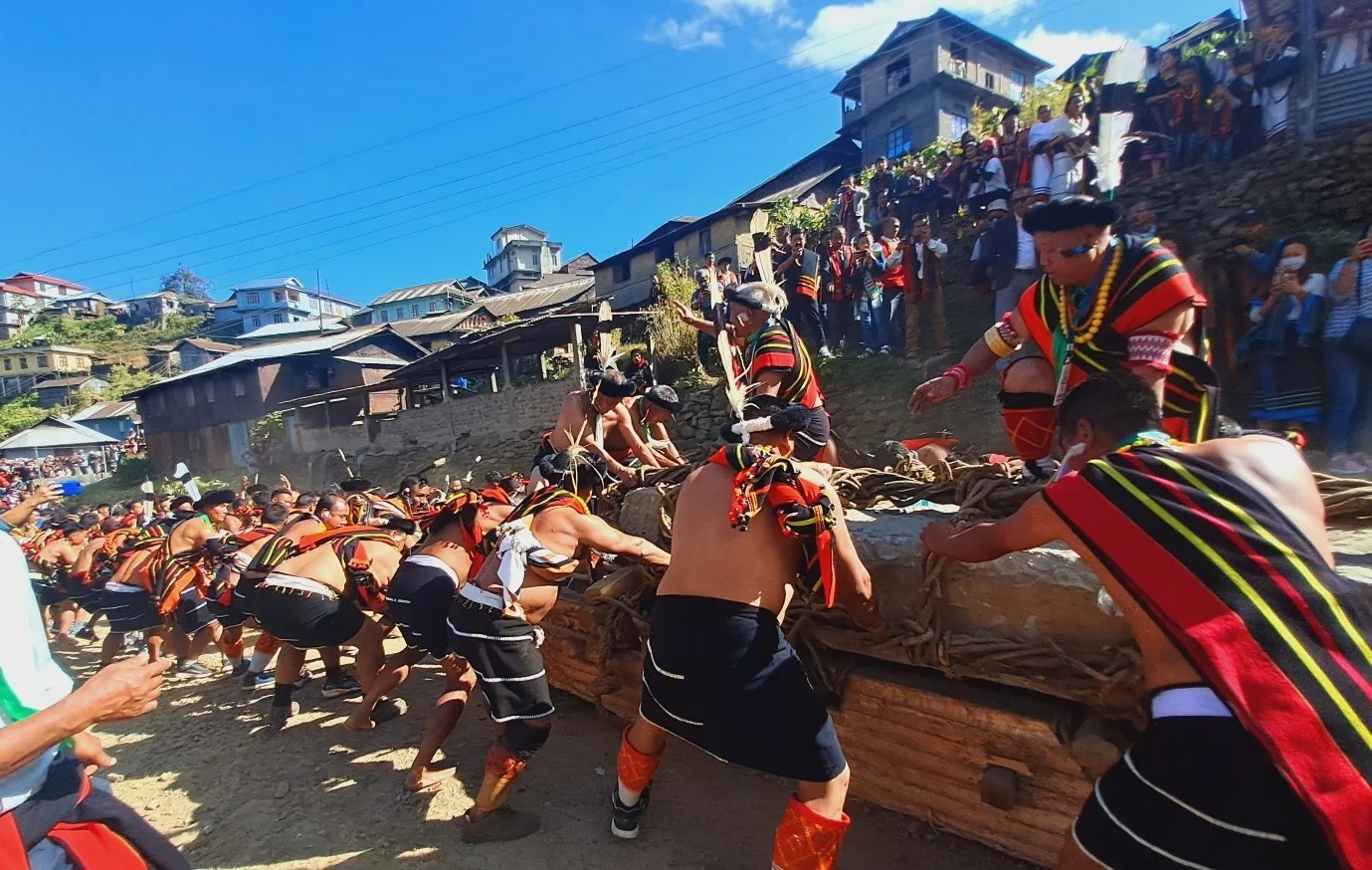
A day behind the rope
The finish: At Kisama, a final heave and a wave of cheers. Then a shared meal, thanks offered, and stories retold for the next generation.
Dawn prep: Ropes checked, path cleared, wedges placed. Elders offer blessings. Youths start the chorus that keeps the rhythm steady.
The haul: The rope creaks, the stone shifts, and voices surge in unison. Leaders call, pullers answer, and the crowd becomes a single body in motion.
Support squads: Women and elders weave through with water, rice, meat, and first-aid. If a rope snaps, it’s tied again fast, calm, focused.
What it means
- Unity in motion: The rope binds villages, generations, and visitors into one shared effort.
- Resilience you can see: If pace falters, the song lifts it; if gear fails, skills fix it.
- Heritage with purpose: Culture isn’t just remembered—it’s practiced, together.
How to witness respectfully
- Give space: Stay clear of the rope path and follow marshal guidance.
- Film with care: Ask before close-up shots of elders, blessings, or prayers.
- Share with context: Name the Angami community and Kisama, credit organizers, avoid dramatic or misleading captions.