I write this like someone who walked down the sloping lanes of Kigwema Village, brushed fingertips along the grain of Angami handloom warp, and listened to women hum softly as they passed shuttle to shuttle.
Kigwema, a Southern Angami village tucked just a short drive south of Kohima, is old, proud, and still threaded through with stories told in cloth.
Here, heritage isn’t displayed in a museum it’s lived, worn, and woven every single day.
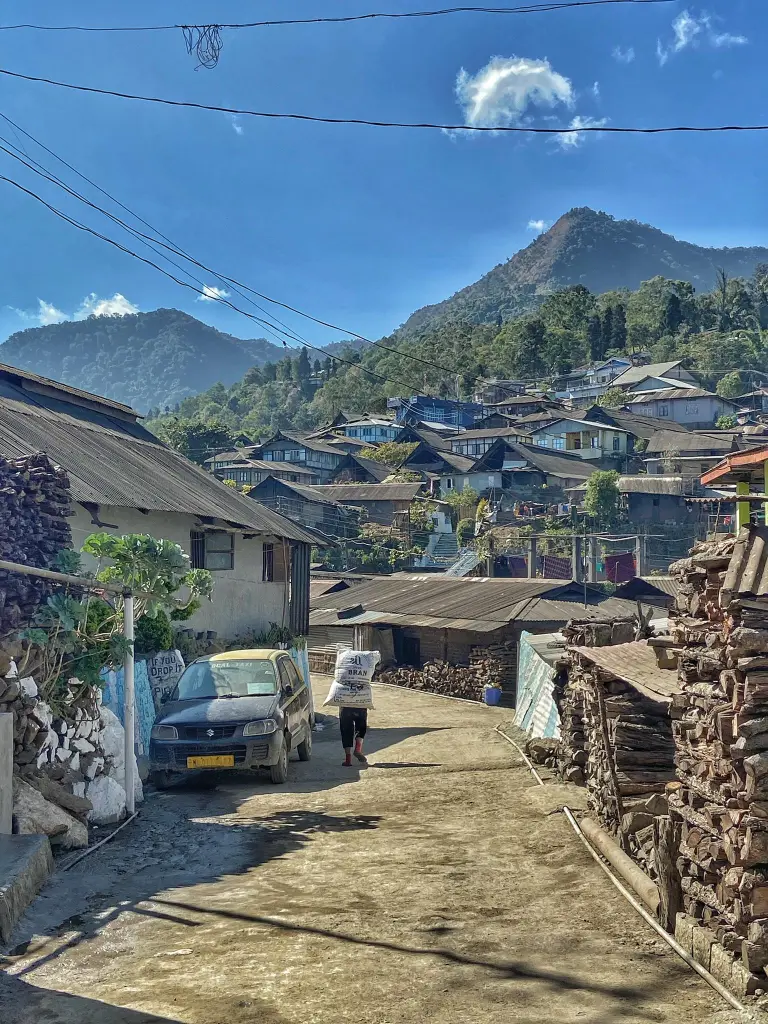
A living village, a living craft
Kigwema’s terraces and timber houses hold more than landscape they hold generational craft knowledge passed woman to woman, loom to loom.
In this village, weaving is not a hobby, it’s an Angami tradition, a rhythm that keeps the community connected.
Young women, students, mothers, and teachers all take up the loom and create the handwoven Angami shawls and wrappers known locally as Lohe, Phemhou, and related garments.
These textiles are woven for daily wear, for rites of passage, for church gatherings, and the big festivals that stitch the community together.
One such festival is Sekrenyi, the Angami purification festival, where traditional shawls are worn with deliberate pride a reminder that in Angami life, cloth is identity and weaving is memory.
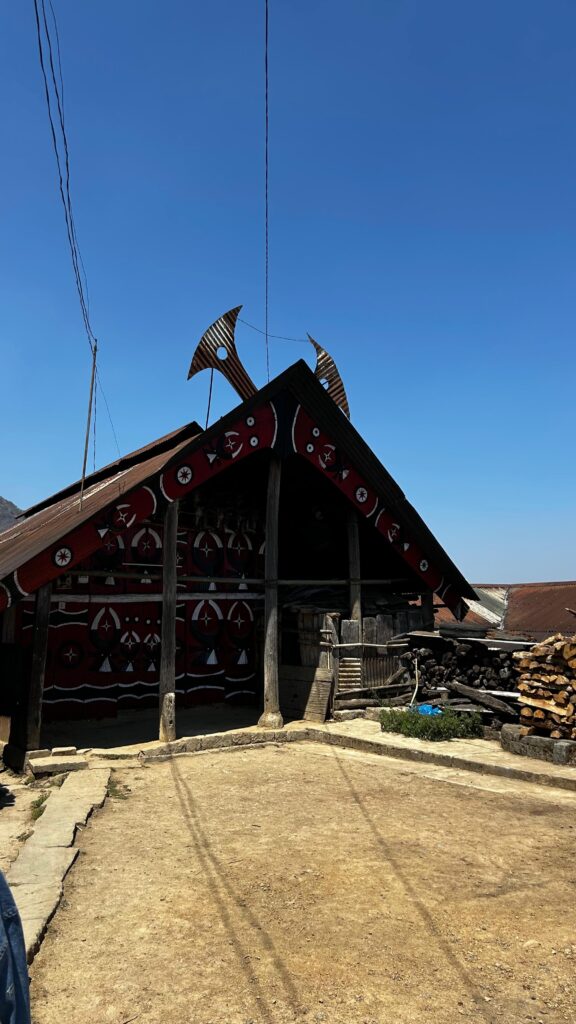
The Art of Angami Weaving Technique, Motif, and Meaning
If you know Naga textiles, you know each tribe’s shawl is a statement a language of colors, stripes, and motifs.
Angami shawls, however, carry a distinctive rhythm. They use bold contrasts black and red with yellow, orange, or green accents each hue symbolizing courage, community, and continuity.
The motifs tell stories: horns of the mithun, spears of the warrior, or patterns of the fields. Every design is an echo of Angami identity, preserved through generations of Kigwema’s women weavers.
Beyond color and motif lies technique. Many Naga shawls are woven in panels and then joined by hand a labor of precision that gives these wraps their iconic size and strength.
This panel-weaving method, paired with Angami patterns, gives each piece its distinct structure, durability, and presence a kind of wearable architecture.
What makes Angami weaving and Kigwema’s weavers different
If you know Naga textiles, you know each tribe’s shawl is a statement a language of colors, stripes and motifs. Angami shawls traditionally use bold, contrasting bands: blacks and reds with yellow, orange or green accents; motifs often reference animals, swords, and status all compact stories in thread. The Angami weaving style is recognizably bold and symbolic, tied to warrior histories and village identity.
Beyond color and motif, there’s technique. Many Naga shawls are woven in panels and then carefully joined, a labor-intensive process that produces the large, dramatic wraps worn in ceremonial life. That patchwork-then-stitch approach, paired with local patterns, gives Angami pieces their structure and presence.
Why Kigwema’s Handwoven Cloth Matters
In a world of fast fashion and machine-made uniformity, Kigwema’s handloom textiles stand apart.
They are organic, slow-made, and community-driven woven from threads of both heritage and sustainability.
Every shawl tells who you are, where you belong, and what stories your family carries.
Buying from Kigwema’s Angami weavers means supporting a tradition that’s as eco-conscious as it is culturally profound.
It means choosing handmade over machine-made, heritage over mass production, and connection over consumption.
Each cloth is not just an item of clothing; it’s a cultural narrative spun, dyed, and woven by hands that have inherited both skill and soul.